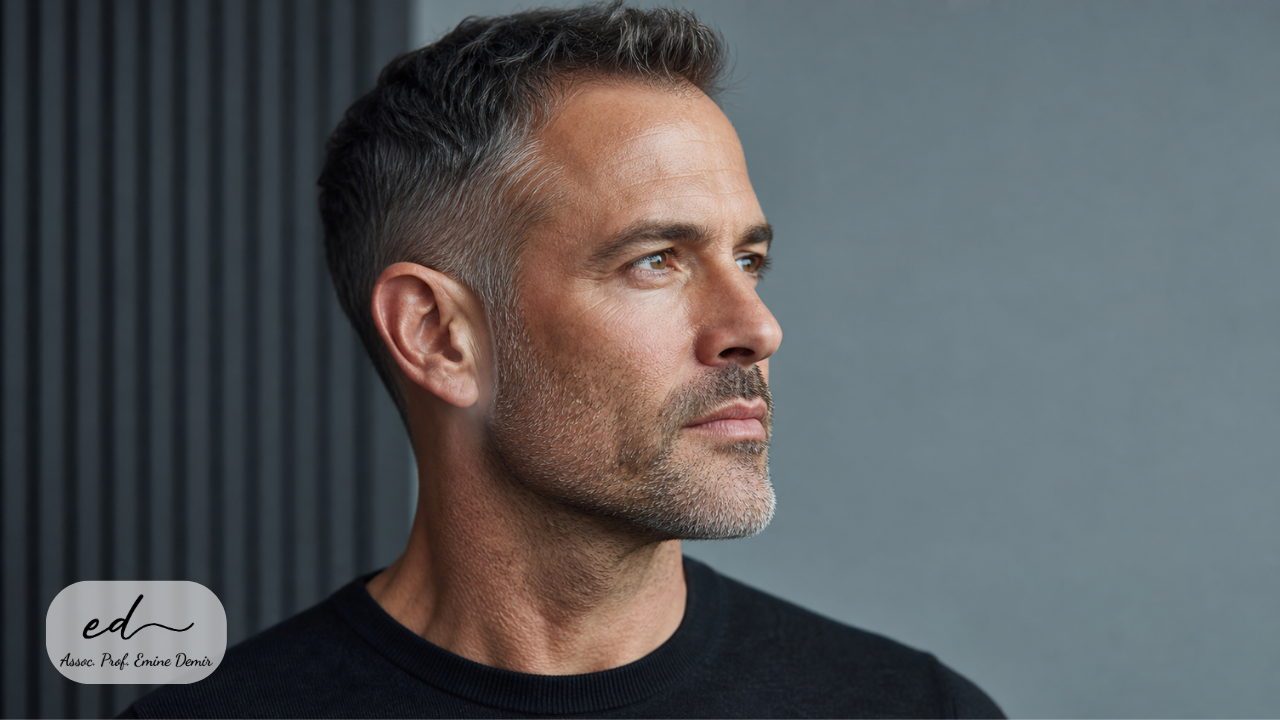

The most useful questions in a facelift consultation are not about the surgeon’s credentials in general, but about their experience with this specific operation. Deep plane facelift is a distinct technique, and a surgeon who performs it regularly works differently from one who performs it occasionally. Eight questions separate a considered answer from a rehearsed one.
By the time most patients reach consultation, they have read enough to know what a deep plane facelift is.
What they usually have not worked out is how to tell one surgeon from another.
Websites look similar. Photographs look similar. Everyone is experienced, everyone is dedicated, and everyone shows results that look good.
The questions below are designed to get past that — not by testing knowledge, but by asking things that only someone who does this work regularly can answer specifically.
A useful consultation should feel like a medical discussion. If it feels like a sales conversation, that is information in itself.
1. “What board certifies you, and in what?”
Almost every cosmetic surgery website uses the phrase “board certified.” The meaningful question is which board, and in which specialty.
The American Society of Plastic Surgeons makes this point directly. Some certifying boards not recognised by the American Board of Medical Specialties use the term “cosmetic” — and in some cases, a medical degree in obstetrics, urology or orthopaedic surgery is sufficient to apply.
The ASPS puts the question plainly: these are all vital medical professionals, but ask yourself whether you want a facelift performed by someone trained as a urologist.
What to look for
For facial surgery, the relevant training pathways are plastic and reconstructive surgery, or otolaryngology with facial plastic surgery subspecialisation. In Europe, board certification through EBOPRAS or the equivalent national body serves the same function.
This is the baseline, not a distinction. Certification tells you someone completed structured training and passed examination. It does not tell you how often they perform your operation.
Which is why the next question matters more.
2. “How many deep plane facelifts do you perform in a year?”
This is the single most useful question in the list, and the one most often answered vaguely.
Note the wording carefully. Not “how many facelifts” — how many deep plane facelifts.
Why the distinction matters
Deep plane facelift is not a variation on a standard lift. It involves releasing the SMAS beneath and repositioning it, rather than tightening or gathering it — a different dissection, different anatomical landmarks, different risk profile.
The principle in the literature is consistent: a surgeon who performs facelifts regularly as a core part of their practice develops more refined and current technique than one who performs them occasionally alongside a wide range of other procedures.
Procedure-specific volume is the meaningful indicator — not total surgical volume, and not years in practice.
What a good answer sounds like
A specific number, and a sense of what proportion of their practice facial surgery represents.
“Quite a lot” is not an answer. Neither is “I’ve been doing this for twenty years” — twenty years of occasional facelifts is different from five years of regular ones.
3. “May I see healed results from patients like me?”
Photographs are the most useful tool you have, provided you know how to read them.
What a proper gallery looks like
Published guidance on photographic standards is specific:
- A full set per patient: frontal, oblique, profile, bird’s eye and worm’s eye views
- Consistency: the same lighting, camera distance, posture, clothing and angles in before and after images
- Unretouched images
- The same healing stage across comparisons
- Currency: a regularly updated database of recently consented patients
If the “after” photograph has better lighting, a different angle or a different expression, you are looking at presentation rather than result.
Ask for the timing
This is the detail most patients miss.
A dramatic early postoperative image may be showing swelling rather than a settled result. Deep plane facelift results settle over months, and the shape at six weeks is not the shape at twelve months.
Ask specifically for six-month and one-year photographs. A surgeon who follows patients long-term will have them.
Ask for cases like yours
Look for patients with similar facial structure, similar age and similar concerns to yours — not simply good results in general.
If nobody in the gallery resembles you, ask to see additional cases in consultation. A gallery without anyone comparable to you tells you something.
The insight worth keeping
Published guidance makes a point that changes how you read any gallery: surgeons post what they consider their best results.
So if the photographs are not impressive, the implication is not that they have better work hidden away. It suggests either that the outcomes are not better, or that the surgeon cannot critique their own work at a high level.
Judge the gallery as the ceiling, not the average.
4. “What complications do you see most often, and how do you manage them?”
This question is diagnostic, and the value is in how it is answered.
Published guidance on surgeon selection notes that honest answers here reveal a surgeon who is transparent about the full picture rather than presenting only the positive.
What a good answer contains
For facelift specifically, haematoma is the most common complication requiring return to theatre. It typically presents within the first 24 to 48 hours, and identified early it is straightforward to manage.
A surgeon who does this work regularly will name it without hesitation, describe how they monitor for it, and explain what happens if it occurs.
They should also be able to discuss nerve-related risks accurately rather than either dismissing them or overstating them — and to explain why the deep plane approach does not carry the elevated nerve risk it is sometimes assumed to.
These are covered in more detail in the article on risks and complications.
What should give you pause
Dismissive responses to questions about risks are listed among clear red flags in published guidance.
“Complications are very rare, don’t worry about it” is not reassurance. It is an unwillingness to have the conversation.
5. “Where will you operate, and is that facility accredited?”
Surgery should take place in a properly accredited facility — hospital-based or a certified surgical centre — with appropriate equipment, trained staff and emergency protocols.
Two specific things to confirm:
- The name of the facility where your surgery and overnight care will take place.
- That its accreditation is current, and that it covers that specific facility.
Surgery in non-accredited facilities appears among the clear red flags in published guidance.
Ask separately about anaesthesia: who administers it, and what are their credentials.
6. “Will my neck be addressed, and how?”
This question does two things at once: it gets you a clinically important answer, and it reveals how individually the surgeon is planning.
Why it matters clinically
A facelift alone does not fully correct the neck. Most of what creates neck fullness sits beneath the platysma — in a plane a lateral facelift approach does not open.
Long-term data also shows the neck deteriorates faster than the midface. In one study at 5.5 years after surgery, jowl correction showed 21 per cent relapse while the cervicomental angle showed 69 per cent.
So if the neck is part of your concern, how it is addressed determines how long you are happy.
Why it is diagnostic
A surgeon planning individually will answer with reference to your anatomy — what they see in your neck, whether submental access is needed, whether platysmal bands require midline correction.
A generic answer suggests a generic plan.
The anatomy is covered in the article on the combined approach.
7. “Where exactly will my incisions be, and why there?”
Incision placement is where individual planning becomes visible.
There is no single correct answer. Retrotragal placement conceals the scar behind the tragal cartilage and suits many patients. Pretragal placement sits in front of the ear and is frequently preferred in men, because a retrotragal incision risks pulling beard-bearing skin onto the tragus.
Hairline position, hair density and — in men — the likely pattern of future hair loss all influence the decision.
What to listen for
A surgeon who explains why they are choosing a particular placement for you is planning individually. One who describes their standard approach is applying a template.
Ask also about your sideburn: where will it sit afterwards? It is a concrete question with a concrete answer.
Incision planning and scar behaviour are covered in the article on scars and incisions.
8. “What are we not going to change?”
This is the question almost nobody asks, and it may be the most revealing.
Facelift surgery can go wrong through overcorrection as easily as undercorrection. A face that has been lifted too far reads as altered rather than rested — and that is far harder to reverse than a conservative result.
A surgeon who can articulate what they will preserve — which features define your face, what they intend to leave alone, where they will stop — is thinking about a natural result rather than a dramatic one.
It is also worth asking directly: what would make you decline to operate on someone?
A surgeon with clear criteria for declining has criteria for accepting. One who operates on everyone who asks is not selecting patients.
Warning signs
Published guidance identifies a consistent set of red flags:
- Pressure to schedule before you are ready, or a discount that expires
- Reluctance to show before-and-after photographs of their own patients
- Surgery in non-accredited facilities
- Board certification from boards not recognised by the relevant medical specialty authority
- Unusually low fees compared with similar surgeons
- Dismissive responses to questions about risks or complications
Two more worth adding for this operation specifically:
Guarantees of a specific result. No surgeon can guarantee an aesthetic outcome. Individual anatomy, tissue behaviour and healing determine what is achievable, and any promise that ignores this should reduce rather than increase your confidence.
Superlative claims. “Best surgeon,” “number one,” “leading expert” — these are marketing assertions rather than verifiable facts. What is verifiable is training, procedure-specific volume, healed results and how questions are answered.
And the general principle from published guidance: if a consultation feels more like a sales pitch than a medical discussion, that is important information.
For patients consulting remotely
If you are considering surgery abroad, three of these questions carry additional weight.
Question 3 (photographs) becomes more important, because you cannot assess the practice in person. Ask for six-month and one-year results specifically, and for cases resembling your anatomy.
Question 5 (facility) becomes critical. Confirm the name of the facility, that its accreditation is current, and that it is where your surgery and overnight care will take place — not an associated hospital you will never see.
Question 4 (complications) should extend to logistics. Haematoma presents in the first 24 to 48 hours. Ask how you will be monitored during that window and how long you are expected to stay. A stay planned around that window indicates that safety, rather than itinerary, is driving the plan.
These considerations are covered in the guide for international patients.
What a good consultation feels like
Beyond the specific answers, the texture of the conversation tells you a great deal.
| A good sign | A concerning sign |
|---|---|
| Answers reference your anatomy specifically | Answers describe a standard approach |
| Limits are stated clearly | Everything is achievable |
| Risks are discussed without prompting | Risks are minimised or deflected |
| You are asked what you expect | Only the procedure is discussed |
| You leave to think it over | You are asked to decide today |
| A different procedure may be suggested | The procedure you asked about is confirmed |
The last row is worth dwelling on. A surgeon willing to tell you that what you asked for is not what you need is giving you something more valuable than agreement.
In summary
Board certification is the baseline — but the meaningful question is which board and in what specialty, given that some certifications require training in unrelated fields.
Procedure-specific volume matters more than general experience. Deep plane facelift is a distinct technique, and how often a surgeon performs it is more informative than how long they have been in practice.
Photographs are useful when read properly: standardised views, consistent conditions, unretouched, and — critically — at six months and one year rather than at six weeks. Remember that a gallery represents a surgeon’s best work, not their average.
And the questions that reveal most are the ones about limits: what complications they see, what they will preserve, and what would make them decline to operate.
If you would like your own anatomy assessed and these questions answered specifically, you can arrange a free video consultation. The technique itself is explained in the article on anatomy and approach, and candidacy criteria in a separate piece.
Frequently Asked Questions
What board certification should a facelift surgeon hold?
For facial surgery, the relevant pathways are plastic and reconstructive surgery, or otolaryngology with facial plastic subspecialisation. The American Society of Plastic Surgeons notes that some boards not recognised by the American Board of Medical Specialties use the term “cosmetic,” and that a medical degree in fields such as obstetrics, urology or orthopaedic surgery may be sufficient to apply.
How many deep plane facelifts should a surgeon perform?
There is no single threshold, but procedure-specific volume is the meaningful indicator rather than total experience. A surgeon who performs facelifts as a core part of their practice develops more refined technique than one performing them occasionally alongside varied procedures. Ask for a specific number and what proportion of their practice facial surgery represents.
What should I look for in before-and-after photographs?
A full set per patient — frontal, oblique, profile, bird’s eye and worm’s eye — with consistent lighting, camera distance, posture and angles, unretouched, at the same healing stage. Ask specifically for six-month and one-year results, since early images may show swelling rather than a settled outcome.
What if nobody in the gallery looks like me?
Ask to see additional cases in consultation matching your age, facial structure and concerns. A gallery without anyone comparable to you is itself information.
How should a surgeon answer questions about complications?
Specifically and without deflection. Haematoma is the most common facelift complication requiring return to theatre, presenting within the first 24 to 48 hours. Published guidance lists dismissive responses to questions about risks among clear red flags.
Why ask what will not be changed?
Because overcorrection is as much a risk as undercorrection, and it is harder to reverse. A surgeon who can articulate what they will preserve is planning for a natural result rather than a dramatic one.
What are the main red flags?
Pressure to schedule, reluctance to show their own patients’ photographs, non-accredited facilities, certification from unrecognised boards, unusually low fees, and dismissive responses about risks. Guarantees of a specific result and superlative claims are also worth treating with caution.
What matters most for a remote consultation?
Photographs at six months and one year, confirmation of the exact facility and its current accreditation, and a clear answer on how you will be monitored during the first 24 to 48 hours when haematoma typically presents.
Assoc. Prof. Dr. Emine Demir — Facial Aesthetic Surgeon specialising in deep plane facelift, neck lift and endoscopic facial rejuvenation. About Dr. Demir
This content is for informational purposes only and does not constitute medical advice. Individual anatomy determines achievable outcomes and results vary between patients. Please consult a qualified physician regarding your own situation.
References
- American Society of Plastic Surgeons. Why board certification matters for plastic surgery.
- American Board of Cosmetic Surgery. Tips for choosing a cosmetic surgeon — consultation questions and photograph review.
- Standards for before-and-after photographic documentation in aesthetic surgery.
- Jones BM, Lo SJ. How long does a face lift last? Objective and subjective measurements over a 5-year period.
- How to Prevent and Treat Complications in Facelift Surgery, Part 1: Short-Term Complications. PMC8240741.