
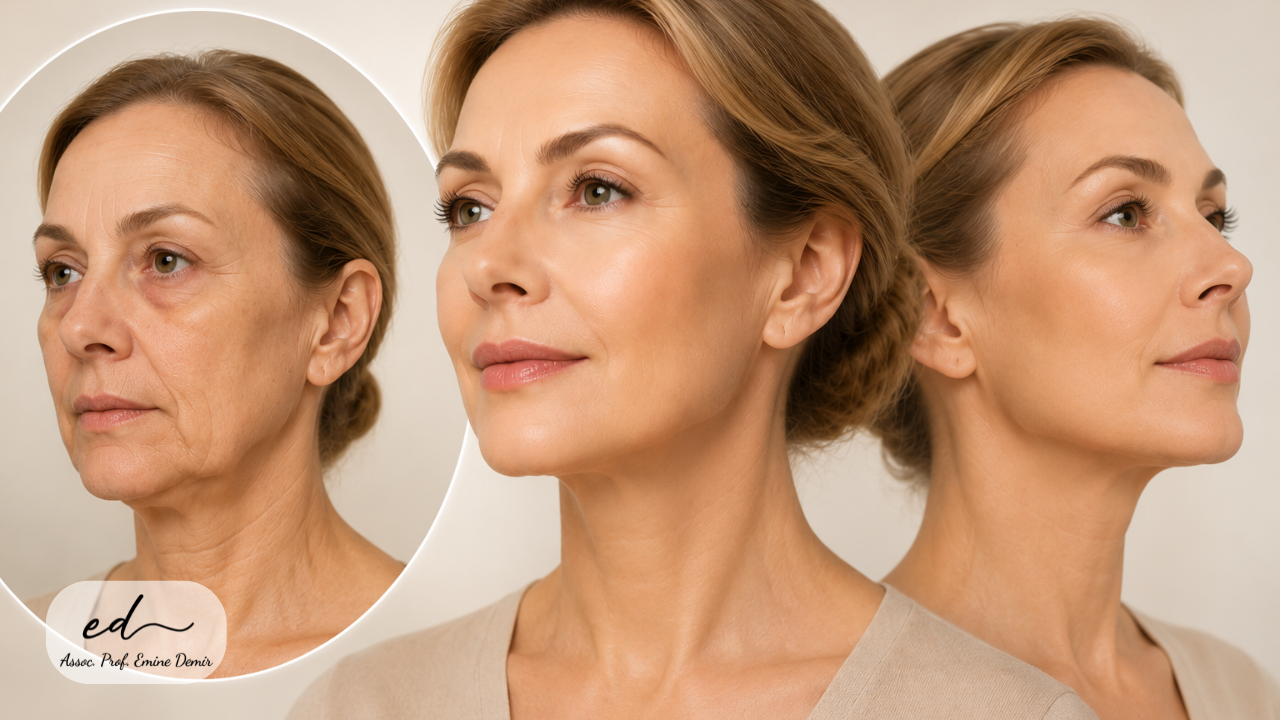
Deep plane facelift before and after photos are among the most searched topics by patients considering facial rejuvenation. And this is completely understandable. Before making a decision about surgery, people want to see what real results look like.
But there is one important question behind almost every search:
“Will I still look like myself?”
Most patients are not looking for an overly tight, artificial, or “done” appearance. They want to look refreshed, rested, more balanced, and naturally rejuvenated. They want their jawline to look cleaner, their cheeks to look better supported, and their neck to look more harmonious — without the face looking pulled or windswept.
This is where deep plane facelift becomes an important topic.
A deep plane facelift is designed to reposition deeper facial tissues rather than simply tightening the skin. It focuses on the deeper support structures of the face, including SMAS-related tissues, retaining ligaments, cheek fat pads, jowls, jawline, and often the neck. Because the lift comes from deeper anatomical repositioning, the skin does not need to carry excessive tension.
For patients considering deep plane facelift in İstanbul, Türkiye, before and after images can be very helpful — but only when they are interpreted correctly. A photo should not be seen as a promise. It should be seen as an educational example of what may be possible in a suitable patient.
Assoc. Prof. Emine Demir, an Ear, Nose and Throat specialist and founder of Facelift Academy Türkiye, approaches facial rejuvenation with a full face perspective. In this context, before and after photos should show more than just a tighter face. They should show harmony, proportion, natural expression, and a result that fits the patient’s identity.
Why Before and After Photos Matter
Before and after photos are powerful because they make surgical concepts easier to understand. Patients can read about SMAS, retaining ligaments, deep fat pads, neck lift, jowls, and midface descent — but visual examples often explain these ideas more clearly.
A well-selected before and after gallery can help patients understand:
How the jawline may become more defined
How jowls may soften
How cheek support may improve
How the neck contour may look smoother
How nasolabial folds may become less heavy
How the face can look refreshed without appearing tight
How results vary from person to person
However, before and after photos should be used responsibly. They should not create unrealistic expectations. They should not be edited in a misleading way. They should not imply that every patient will achieve the same result.
Every face has different anatomy. Every patient heals differently. Skin quality, age, bone structure, facial volume, neck condition, previous procedures, smoking history, and surgical planning all influence the final appearance.
So, when looking at deep plane facelift before and after images, the goal is not to find a copy-paste result. The goal is to understand what natural facial rejuvenation can look like.
What Does a Natural Deep Plane Facelift Result Look Like?
A natural deep plane facelift result usually does not scream, “I had surgery.” Instead, it creates a quieter kind of improvement.
The patient may look more rested. The jawline may look cleaner. The cheeks may appear better supported. The lower face may look lighter. The neck may look smoother. But the person should still look like themselves.
Natural results often include:
A defined but not overly sharp jawline
Softer jowls without a pulled mouth
A smoother neck contour
Better cheek support
Less heaviness around the lower face
A refreshed but familiar expression
No stretched skin appearance
No distorted ear or hairline
No “wind tunnel” look
No frozen or overly tight facial expression
A good deep plane facelift should respect facial identity. It should not erase character. It should not create the same look on every patient.
This is especially important in VIP-level facial rejuvenation. Many patients want privacy and elegance. They do not want people to immediately know they had surgery. They simply want to look well, balanced, and refreshed.
Why Some Facelifts Look Overly Tight
The “windswept” facelift look is one of the biggest fears patients have. It usually refers to a face that appears pulled sideways, tight around the mouth, distorted near the ears, or stretched in an unnatural direction.
This kind of appearance may occur when too much tension is placed on the skin rather than the deeper facial support system.
In older skin-focused facelift techniques, the skin was sometimes lifted, pulled, and trimmed while deeper facial structures received limited repositioning. This could create surface tightness without truly restoring the underlying facial foundation.
When the skin carries too much tension, several problems may appear:
The mouth may look pulled sideways.
The cheeks may look flattened.
The earlobe may appear stretched.
The hairline may shift unnaturally.
The face may look tight but not youthful.
The expression may look different from the person’s natural identity.
This is why modern facelift planning focuses more on deeper tissue support.
A natural facelift should not depend on skin tension alone. The deeper tissues should be repositioned first, and the skin should then be redraped gently.
Why Deep Plane Facelift Can Avoid the “Pulled” Look
Deep plane facelift is different because it works beneath the superficial layers of the face. Instead of relying mainly on pulling skin, it releases selected retaining ligaments and repositions deeper tissues as a more natural unit.
This matters because facial aging is not just loose skin.
The cheeks descend. Fat pads shift. Ligaments hold tissues in certain positions. Jowls form along the jawline. The lower face becomes heavier. The neck may loosen. If only the skin is pulled, the deeper problem may remain.
Deep plane facelift aims to address the deeper problem.
In suitable patients, this can help create a more natural-looking result because:
The lift comes from deeper tissue repositioning.
The skin is not forced to carry the main tension.
Cheek tissues may be supported more anatomically.
Jowls may be improved through structural lifting.
The jawline can look cleaner without an artificial pull.
The neck can be treated as part of the same facial harmony plan.
Facial expression can remain more natural.
A simple analogy may help.
Imagine a sofa cover that looks loose because the cushions underneath have shifted. If you only pull the fabric tighter, the surface may look smoother temporarily, but the shape underneath is still wrong. A better solution is to reposition the cushions first, then smooth the fabric gently.
Deep plane facelift works with a similar idea. It focuses on the deeper support before adjusting the surface.
Before and After: What Areas Should You Look At?
When reviewing deep plane facelift before and after photos, patients often focus only on the face as a whole. But it is better to look carefully at specific areas.
A natural result is usually visible in small details.
Jawline
The jawline is one of the most important areas to evaluate. Before surgery, the jawline may look blurred because of jowls and lower face laxity. After surgery, the jawline may look cleaner and more defined.
A natural jawline should not look overly sharp or artificial. It should fit the patient’s age, neck, chin, and facial structure.
Jowls
Jowls are one of the most common reasons patients consider facelift surgery. In before photos, jowls may create heaviness around the lower face. In after photos, the jowl area may appear smoother and better supported.
A good result softens the jowls without pulling the mouth or creating an unnatural expression.
Cheeks
In deep plane facelift, cheek support is important. The cheeks may look descended or flattened before surgery. After surgery, they may appear better positioned.
The goal is not to create overly full cheeks. The goal is to restore support and harmony.
Nasolabial Folds
Nasolabial folds naturally exist in every face. Surgery should not erase them completely. But deep plane facelift may reduce heaviness around this area by repositioning deeper cheek tissues.
A natural result softens the fold without making the face look stiff or overfilled.
Neck
If a neck lift is included, the neck may show a smoother contour and improved chin-neck angle. Before photos may show loose skin, bands, or fullness under the chin. After photos may show better definition.
The neck should match the face. A rejuvenated face with an untreated neck can look incomplete.
Ear and Hairline
This is a detail many patients forget to check.
A natural facelift should not distort the earlobe, tragus, sideburn, or hairline. These areas should look discreet and balanced.
If the ear looks pulled or the hairline appears shifted, the result may look less natural.
Assoc. Prof. Emine Demir’s Patient Image Placement Suggestions
For this blog article, Assoc. Prof. Emine Demir’s own patient images can be placed strategically throughout the page. The goal should be educational, not exaggerated.
Before and after photos should be selected carefully. They should show natural results, similar lighting, similar angles, and realistic healing stages.
Suggested Image Area 1: Main Before and After Gallery
Place a clean gallery after the section “What Does a Natural Deep Plane Facelift Result Look Like?”
Recommended visual format:
Front view before and after
Side profile before and after
Oblique angle before and after
Optional neck close-up if consent allows
The images should be presented with consistent lighting and no dramatic filters. The more honest the visual comparison, the more trustworthy the content feels.
Suggested Image Area 2: Jawline and Jowl Improvement
Place a close-up patient example after the section about jawline and jowls.
This visual can show how lower face heaviness and jowling may improve after deep plane facelift or full face rejuvenation.
Suggested Image Area 3: Neck and Lower Face Harmony
Place a patient example showing the face and neck together.
This is especially useful if the patient had deep plane facelift combined with neck lift. It helps readers understand that lower face and neck rejuvenation often need to be evaluated together.
Suggested Image Area 4: Natural Expression
Place a patient image where the face is relaxed and natural, not overly posed.
This helps communicate one of the most important messages of the article: natural results should preserve expression.
Alt-Text Examples for Deep Plane Facelift Images
Alt-text is important for SEO and accessibility. It helps search engines understand the image, but more importantly, it helps users who rely on screen readers.
Alt-text should be descriptive, realistic, and non-exaggerated. It should not make promises or use promotional language such as “perfect result” or “best transformation.”
Here are examples:
Deep plane facelift before and after showing natural jawline refinement and lower face rejuvenation
Deep plane facelift result with improved jowl contour and balanced facial harmony
Natural deep plane facelift before and after showing refreshed lower face and neck appearance
Face and neck lift before and after with smoother neck contour and softer jawline transition
Deep plane facelift patient example showing natural-looking facial rejuvenation in İstanbul Türkiye
Before and after deep plane facelift showing midface support and improved lower face definition
Natural facelift result with preserved facial expression and balanced cheek support
Deep plane facelift and neck lift before and after showing refined jawline and neck harmony
For Assoc. Prof. Emine Demir’s own gallery, the alt-text can include her name naturally when appropriate:
Assoc. Prof. Emine Demir deep plane facelift before and after showing natural facial rejuvenation
Deep plane facelift in İstanbul Türkiye by Assoc. Prof. Emine Demir with balanced lower face improvement
Do not overuse the same keyword in every image. Alt-text should feel natural and specific.
Consent and Compliance Note for Before and After Photos
Before and after photos should only be used with proper patient permission.
Aesthetic surgery images are sensitive medical visuals. Even if the patient’s identity seems partially hidden, the face is highly identifiable. Written informed consent should be obtained before using patient images on a website, blog, social media, presentation, or advertising material.
A responsible consent process should clarify:
Where the images may be used
Whether the face will be visible
Whether the images may appear on the website
Whether the images may be used on social media
Whether the images may be used in educational content
Whether the patient can withdraw permission according to the consent policy
How privacy will be protected
Whether images will be edited or cropped
Whether the patient’s name or personal details will be included
Before and after photos should also be used in accordance with applicable health communication and advertising regulations. They should not imply guaranteed results. They should not create unrealistic expectations. They should not be presented as if every patient will achieve the same outcome.
A good consent note for internal clinic use may say:
Patient images should be used only with written informed consent and in accordance with applicable medical advertising, privacy, and health communication regulations. Results vary from person to person, and before and after photos should be presented for educational purposes without implying guaranteed outcomes.
What Makes a Before and After Photo Trustworthy?
Not all before and after photos are equally useful. Some can be misleading because of lighting, angle, makeup, facial expression, camera lens, posture, or editing.
A trustworthy before and after comparison should have:
Similar lighting
Similar camera angle
Similar facial expression
Similar head position
Similar background
No heavy filters
No excessive makeup differences
Clear timing after surgery
Honest representation of swelling stage
No exaggerated claims
For example, if the before photo is taken with harsh lighting and the after photo is taken with soft studio lighting, the improvement may look stronger than it really is. If the patient is frowning in the before photo but smiling in the after photo, the comparison becomes less reliable.
Good medical photography should be consistent.
For a VIP-level facial rejuvenation practice in İstanbul, Türkiye, photo quality should support trust. Clean, honest, standardized images are more powerful than overly dramatic visuals.
When Should After Photos Be Taken?
Timing matters.
A photo taken two weeks after surgery may still show swelling. A photo taken six weeks after surgery may look more refined but still not fully final. A photo taken six months or one year later may show a more settled result.
For deep plane facelift, the final result usually continues to refine over months. This is why a before and after gallery may include different stages when appropriate.
Useful photo timing may include:
Early recovery photos for educational recovery content
Six-week photos to show early social recovery
Three-month photos to show improving definition
Six-month photos to show more settled tissue
One-year photos to show mature results
For a transformation-focused blog, the most useful images are usually those taken after the result has settled enough to look natural. However, recovery-stage photos can be valuable in a separate recovery article.
In this article, the focus should be on natural results, not immediate postoperative swelling.
Natural Does Not Mean “No Change”
Some patients misunderstand the word natural. They think natural results must be very subtle or barely visible. That is not always true.
A natural deep plane facelift can still create meaningful improvement. The jawline can become clearer. Jowls can soften significantly. The neck can look smoother. The cheeks can look better supported.
Natural means the result belongs to the person’s face.
It does not mean weak correction. It means the correction is balanced.
A natural result should avoid:
Over-pulled skin
Overly sharp angles
Flat cheeks
Distorted mouth corners
Visible tension around the ears
Expression changes
Artificial tightness
Overfilled appearance
A face that no longer matches the patient’s age or identity
In other words, natural results can be transformative — but they should still look human, elegant, and believable.
Why Full Face Harmony Matters in Before and After Results
A deep plane facelift does not exist in isolation. The face is a connected structure.
If the lower face is improved but the neck remains loose, the result may look incomplete. If the jawline is refined but the eyelids still look heavy, the face may not feel fully balanced. If the neck is tightened but the midface remains descended, the rejuvenation may appear uneven.
This is why full face rejuvenation planning matters.
Assoc. Prof. Emine Demir’s approach in İstanbul, Türkiye focuses on facial harmony. In some patients, deep plane facelift may be combined with neck lift, blepharoplasty, temporal lift, or other procedures when medically and anatomically appropriate.
This does not mean every patient needs a combination procedure. It means the plan should be selected according to the face.
Before and after photos should ideally show whether the result is balanced across the face and neck.
A good result is not just a better jawline. It is a more harmonious face.
Before and After Results: Deep Plane Facelift With Neck Lift
Many deep plane facelift before and after results include neck lift because the lower face and neck often age together.
When the neck is involved, patients may have:
Loose skin under the chin
Platysma bands
Poor chin-neck angle
Jowls blending into the neck
Lower face heaviness
Aging mismatch between face and neck
A combined face and neck approach may improve harmony in suitable patients.
In before photos, the jawline may look soft and the neck may appear loose. In after photos, the transition from chin to neck may look smoother and more defined.
However, the neck should not look overly tight. A natural neck lift result should preserve softness and movement.
Before and After Results: Deep Plane Facelift With Blepharoplasty
Some patients need eyelid surgery in addition to facelift. This is because deep plane facelift mainly improves the midface, lower face, jawline, and neck. It does not fully correct heavy upper eyelids or lower eyelid bags.
If a patient has a refreshed lower face but tired eyes, the result may not feel complete.
Blepharoplasty may be considered in suitable patients to improve upper eyelid heaviness or lower eyelid puffiness. When combined carefully, this can support full face harmony.
Before and after images in such cases should clearly explain that the result includes more than a deep plane facelift. This is important for transparency.
If the patient had deep plane facelift, neck lift, and blepharoplasty, the caption should not imply that all changes came from facelift alone.
What Patients Should Not Expect From Before and After Photos
Before and after photos are educational, but they have limits.
Patients should not expect:
The exact same result as another patient
Perfect symmetry
A completely different face
Skin texture correction from facelift alone
No swelling during recovery
A guaranteed number of years of result
No scars at all
A result that stops aging forever
Every face is different.
A patient with thicker skin may heal differently from someone with thin skin. A patient with strong bone structure may show a sharper jawline than someone with a softer chin-neck angle. A patient who smokes may have higher healing risks. A patient who had previous procedures may need a different plan.
Before and after photos are examples, not promises.
How to Read Before and After Photos Like a Patient
When reviewing before and after images, ask these questions:
Is the lighting similar?
Is the head position similar?
Is the facial expression similar?
Is the after photo taken after enough healing time?
Does the result look natural?
Does the jawline look improved without looking pulled?
Does the neck match the face?
Are the ears and hairline natural?
Does the patient still look like themselves?
Are additional procedures mentioned clearly?
Is there a consent and results-vary note?
This helps patients evaluate images more responsibly.
A photo gallery should build understanding, not pressure.
Deep Plane Facelift Before and After in İstanbul, Türkiye
İstanbul, Türkiye is one of the most recognized destinations for facial aesthetic surgery and full face rejuvenation. Many international patients research before and after results before deciding to travel.
This is understandable. Traveling for surgery requires trust.
For patients considering deep plane facelift in İstanbul, Türkiye, before and after images can help demonstrate a surgeon’s aesthetic philosophy. Some surgeons prefer more dramatic results. Others focus on subtle, natural, and elegant rejuvenation.
Assoc. Prof. Emine Demir’s patient gallery should ideally reflect:
Natural facial identity
Balanced jawline and neck contour
No exaggerated tightness
Soft cheek support
Preserved expression
Consistent photography
Clear consent
Honest timing after surgery
Full face harmony
A gallery should not feel like a sales tool. It should feel like an educational visual guide.
Suggested Blog Image Layout
For this article, a visual-heavy structure can improve user experience and SEO engagement.
Suggested layout:
Hero image: Elegant deep plane facelift concept visual with face and neck lifting vectors, no text.
Section 1 gallery: Before and after patient images showing natural lower face and jawline improvement.
Section 2 image: Close-up of jawline and jowl improvement.
Section 3 image: Neck lift and lower face harmony example.
Section 4 image: Side profile before and after showing chin-neck angle.
Section 5 image: Natural expression after surgery.
Section 6 image: Educational diagram showing deep tissue repositioning vs skin pulling.
Each image should have descriptive alt-text and proper consent.
Example Captions for Patient Images
Captions should be simple, informative, and careful. They should not promise results.
Examples:
Deep plane facelift before and after showing natural improvement in jawline and lower face contour.
Patient example demonstrating facial rejuvenation with preserved natural expression.
Deep plane facelift and neck lift result showing improved face and neck harmony.
Before and after image showing softer jowls and more defined lower face contour.
Full face rejuvenation result with balanced cheek, jawline, and neck appearance.
Avoid captions like:
Perfect facelift result
Guaranteed natural facelift
Best deep plane facelift result
Look 20 years younger
No scars, no swelling
Instant transformation
Medical language should be responsible and realistic.
Final Thoughts
Deep plane facelift before and after photos can be very helpful for patients researching facial rejuvenation. They show how the jawline, jowls, cheeks, neck, and lower face may improve in suitable patients.
But the most important thing to understand is this: natural results are not about pulling the skin tighter. They are about repositioning the deeper facial structures in a balanced and anatomical way.
A natural deep plane facelift should not create a windswept or overly stretched appearance. It should preserve expression, identity, and facial softness while improving visible signs of aging.
For patients considering deep plane facelift in İstanbul, Türkiye, Assoc. Prof. Emine Demir’s own patient images can play an important educational role when used with proper consent, consistent photography, and realistic captions.
Before and after photos should inspire understanding, not unrealistic expectations.
The best result is not the one that looks the most dramatic. It is the one that looks natural, harmonious, and true to the person.
If this guide helped you understand deep plane facelift before and after results more clearly, you may share it with someone researching facial rejuvenation or use it as a starting point for the questions you may want to ask during consultation.
Frequently Asked Questions
What do natural deep plane facelift results look like?
Natural deep plane facelift results usually show a more defined jawline, softer jowls, better cheek support, smoother neck contour, and a refreshed appearance without an overly tight or pulled look.
Why does deep plane facelift look more natural?
Deep plane facelift may look more natural in suitable patients because it repositions deeper facial tissues instead of relying mainly on skin tension. This helps reduce the risk of a stretched or windswept appearance.
What is the windswept facelift look?
The windswept look refers to an overly pulled facial appearance where the skin seems stretched sideways. It may occur when too much tension is placed on the skin rather than supporting deeper tissues properly.
Can deep plane facelift improve jowls?
Yes, deep plane facelift may improve jowls in suitable patients by repositioning deeper lower face tissues and improving jawline support.
Can deep plane facelift improve the neck?
Deep plane facelift may be combined with neck lift when neck laxity, platysma bands, or loose skin are present. Face and neck harmony should be evaluated together.
Will I look like a different person after deep plane facelift?
The goal of a natural deep plane facelift is not to create a different face. The goal is to help the patient look refreshed, balanced, and naturally rejuvenated while preserving identity.
Are before and after photos a guarantee?
No. Before and after photos are educational examples, not guarantees. Results vary depending on anatomy, skin quality, healing, age, surgical plan, and lifestyle factors.
When should after photos be taken?
After photos may be taken at different stages, but more settled results are usually seen after several months. Early photos may still show swelling or tissue firmness.
Can before and after photos be edited?
Medical before and after photos should not be edited in a misleading way. Lighting, angle, expression, and background should be as consistent as possible.
Why is patient consent important?
Before and after photos are sensitive medical images. They should only be used with written informed consent and in accordance with applicable privacy and medical advertising regulations.
What alt-text should be used for facelift images?
Alt-text should describe the image clearly and naturally, such as “deep plane facelift before and after showing natural jawline refinement and lower face rejuvenation.” It should not use exaggerated claims.
Should Assoc. Prof. Emine Demir’s own patient images be added?
Yes, if written consent is available and the images comply with applicable regulations. Her own patient images can make the article more trustworthy and educational when presented responsibly.
What should I look for in before and after photos?
Look for natural expression, improved jawline, softer jowls, balanced neck contour, consistent lighting, similar angles, natural ears and hairline, and clear explanation of any additional procedures.
Why is İstanbul, Türkiye popular for deep plane facelift?
İstanbul, Türkiye is often preferred for facial rejuvenation because of private healthcare infrastructure, experienced surgeons, international patient coordination, and strong price-quality balance. Surgeon selection and personalized planning remain essential.